Tea Leaves and Traps: What I Learned Balancing Passion with Portfolio Risk
So I thought investing in tea was a smart move—unique, tangible, and rooted in culture. I jumped in, excited by the aroma of rare pu-erh and the promise of appreciation. But reality hit hard. What seemed like a safe, exotic addition to my portfolio turned into a lesson in hidden risks. This isn’t just about leaves and tins; it’s about how emotional choices can cloud financial judgment. Here’s what went wrong—and what I’m fixing now. The journey began with curiosity, deepened with confidence, and ultimately led to a humbling realization: passion, when unchecked, can become a portfolio’s greatest vulnerability. Investing should serve long-term goals, not fleeting feelings. And while rare tea may carry cultural richness, it also carries financial pitfalls that few discuss until it’s too late.
The Allure of Tangible Assets: Why Tea Seemed Like a Safe Bet
For many investors, the appeal of physical assets grows stronger during periods of market uncertainty. When stock indices swing unpredictably and inflation erodes cash value, the idea of holding something real—something you can touch and store—becomes deeply comforting. This psychological anchor is powerful, and it played a central role in my decision to invest in aged pu-erh tea. Unlike digital stocks or abstract derivatives, tea felt grounded in tradition and scarcity. I was drawn to its narrative: a hand-pressed cake from Yunnan, aged for decades, appreciated in elite circles across China and Southeast Asia. It wasn’t just a beverage; it was heritage, craftsmanship, and exclusivity wrapped in bamboo leaves.
What made this investment seem even more logical was the reported price trajectory of certain vintage teas. Over the past two decades, select pu-erh cakes had reportedly appreciated at double-digit annual rates, outpacing inflation and even some equity benchmarks. Stories circulated about rare 1970s or 1980s batches selling for tens of thousands of dollars at auctions. These anecdotes, though unverified in many cases, fed the perception that tea was not only safe but potentially lucrative. I began to believe I was acquiring both a cultural artifact and a financial instrument—a dual-purpose asset that combined personal passion with economic upside.
Yet beneath this compelling surface lay a critical flaw: the absence of a transparent, regulated market. Unlike gold, which trades on global exchanges with real-time pricing, or real estate, which has appraisers and public records, the rare tea market operates largely in the shadows. Prices are often negotiated privately, influenced by relationships, reputation, and subjective assessments. There is no central index, no clearinghouse, and no guarantee of price continuity. What one collector values at $5,000, another might dismiss as overpriced. This lack of standardization means that valuations are speculative at best, emotional at worst. The very qualities that made tea appealing—its uniqueness and cultural weight—also made it a poor candidate for reliable wealth preservation.
Moreover, the belief in scarcity as a driver of value overlooked a key truth: scarcity only matters if there is sustained demand. A rare item with no buyers holds no market value. In the case of aged tea, demand is highly concentrated among a niche group of connoisseurs, primarily in specific regions of Asia. Outside these circles, recognition is limited, and resale options are minimal. I had assumed that global interest in wellness, mindfulness, and traditional practices would naturally expand the buyer pool. But cultural trends do not always translate into financial markets. The emotional resonance of tea did not equate to broad-based economic demand. This disconnect between perception and reality became one of the first cracks in my investment thesis.
The Hidden Liquidity Trap: Selling Isn’t as Easy as Buying
One of the most jarring lessons I learned came not during the purchase but during the attempted sale. Buying tea felt straightforward—connect with a reputable vendor, verify the batch, transfer funds, and receive the product. The process was smooth, almost exhilarating. But when I later decided to liquidate a portion of my collection, the experience was entirely different. What I expected to be a simple transaction turned into a months-long effort filled with uncertainty, negotiation, and disappointment. The fundamental issue was liquidity—or rather, the near-total absence of it.
Liquidity is the lifeblood of any investment. It refers to how quickly and reliably an asset can be converted into cash without significant loss in value. Publicly traded stocks, for example, are highly liquid. With a few clicks, an investor can sell shares at prevailing market prices. Even real estate, though less liquid, has established channels—agents, listings, appraisals—that facilitate transactions. Rare tea, by contrast, exists in a fragmented, opaque marketplace. There are no standardized platforms, no bid-ask spreads, and no real-time pricing. Selling requires finding a willing buyer, often through word-of-mouth networks or specialized auction houses, both of which come with their own limitations.
I turned first to online collector forums, hoping to connect with enthusiasts who might appreciate the provenance and age of my pu-erh cakes. While I received some interest, actual offers were consistently below my expectations—sometimes by 40% or more. Buyers cited concerns about storage conditions, authenticity, and market saturation. Without a third-party certification or verifiable chain of custody, trust became the primary barrier. Even with detailed records of purchase and storage, I couldn’t eliminate the buyer’s skepticism. This was not a market driven by data but by personal relationships and reputation, neither of which I had built.
Next, I explored auction houses that specialize in rare beverages and collectibles. While they offered a more formal route, the costs were prohibitive. Commission fees ranged from 15% to 25%, significantly eating into potential returns. Additionally, there was no guarantee of sale. One cake I submitted remained unsold after the auction, returning to me with no recovery of listing or handling fees. The process was slow, often taking three to six months from submission to final result. During that time, the asset remained idle, generating no income and exposed to ongoing storage risks. This delay and uncertainty starkly contrasted with the immediacy of selling financial securities. I began to realize that my “asset” was, in practice, more like a stored curiosity than a functional investment.
Storage and Degradation: The Silent Value Killers
If liquidity was the first shock, storage and degradation were the slow, insidious forces that undermined my investment over time. Tea is an organic material, sensitive to environmental conditions. Unlike gold bars or digital currencies, it does not remain inert. Its quality—and therefore its market value—depends on consistent, controlled storage. When I first acquired my collection, I treated it much like any other household item, placing the cakes in a closet away from direct sunlight. I assumed that as long as they were dry and out of sight, they would age gracefully. I was wrong.
Over the course of several years, subtle changes began to affect the tea. Humidity fluctuations in my home, particularly during seasonal shifts, led to moisture absorption in the compressed leaves. This not only altered the flavor profile but also increased the risk of mold growth—a death sentence for high-value pu-erh. Even minor exposure to light or strong odors from nearby cleaning supplies could taint the aroma, diminishing its desirability among discerning buyers. I had not accounted for these variables, nor had I invested in proper storage solutions such as climate-controlled cabinets or humidity monitors.
The lack of industry-wide preservation standards made the situation worse. While fine wine has established guidelines for cellaring—specific temperature ranges, humidity levels, and bottle orientation—tea has no such consensus. Different collectors advocate for different methods: some prefer dry storage in arid climates, others favor humid aging in places like Hong Kong to accelerate fermentation. Without clear best practices, I was left to experiment, often learning too late that certain conditions had already compromised the tea’s integrity. One cake, which I had hoped would be a centerpiece of my collection, developed a faint musty odor after a particularly damp summer. Though still drinkable, its resale value plummeted.
Beyond the physical risks, there were also financial costs. Maintaining optimal storage requires investment in equipment, space, and ongoing monitoring. For serious collectors, this may mean renting specialized storage units or installing dedicated rooms with environmental controls. These expenses are rarely discussed when entering the market but can accumulate over time, effectively eroding returns. In my case, I eventually purchased a dehumidifier and temperature-regulated cabinet, adding hundreds of dollars to my holding costs. What I had imagined as a passive, low-maintenance asset turned out to be anything but. The combination of degradation risk and hidden costs revealed a fundamental truth: organic collectibles carry carrying costs that most traditional investments do not.
Market Hype vs. Real Demand: Separating Trend from Truth
At the height of my involvement, I believed I was riding a long-term wave of cultural appreciation and wellness interest. Articles in lifestyle magazines celebrated tea as a symbol of mindfulness, tradition, and natural living. Social media influencers showcased elaborate tea ceremonies, and specialty shops opened in urban centers worldwide. It was easy to interpret this growing visibility as evidence of sustainable demand. I convinced myself that the market for rare tea was expanding globally, driven by a shift toward holistic living and appreciation for artisanal goods. But as time passed, I began to see the difference between trend and transaction.
The reality is that the high-end tea market remains highly concentrated. While casual tea consumption is widespread, the market for vintage, collectible pu-erh is dominated by a relatively small group of buyers, primarily in China, Taiwan, and parts of Southeast Asia. Outside these regions, awareness is limited, and willingness to pay premium prices is even rarer. The global wellness trend boosted interest in tea as a beverage, but not necessarily as an investment-grade commodity. Most consumers buy tea by the ounce for daily use, not by the cake for long-term holding. The speculative price increases I had observed were often driven by short-term collectors and auction flippers, not sustained consumption or broad adoption.
This distinction is crucial. A market fueled by speculation is vulnerable to corrections when sentiment shifts. Unlike commodities with industrial or dietary necessity—such as oil, wheat, or even coffee—rare tea has no intrinsic utility beyond enjoyment. Its value is entirely derived from perception. When enthusiasm wanes, prices can collapse quickly, leaving latecomers with overpriced, illiquid assets. I witnessed this firsthand when a highly publicized auction of vintage teas failed to meet reserve prices. The media coverage that once celebrated record-breaking sales now questioned the sustainability of the market. Investor interest cooled, and secondary market activity slowed.
What I had mistaken for growing demand was, in many cases, a temporary bubble inflated by marketing, nostalgia, and limited supply narratives. While certain vintages did appreciate, the gains were not evenly distributed, and entry timing proved critical. Those who bought at the peak saw little to no return, while early adopters captured most of the upside. This pattern is common in niche collectibles—from rare sneakers to vintage watches—but it carries particular risk when the asset is perishable and lacks a transparent pricing mechanism. The lesson was clear: popularity does not guarantee profitability, and cultural resonance does not ensure financial stability.
Diversification Illusion: When “Alternative” Becomes Overweight
One of the core principles of sound investing is diversification—the practice of spreading capital across different asset classes to reduce risk. When I first added tea to my portfolio, I believed I was diversifying away from traditional financial instruments. Stocks and bonds felt abstract and volatile; tea felt tangible and stable. I saw it as a hedge against market turbulence, a way to balance digital exposure with physical ownership. But over time, this well-intentioned strategy evolved into a dangerous imbalance. What I thought was diversification became concentration—a growing overexposure to a single, illiquid asset class.
The shift happened gradually. After my initial purchase, I reinvested profits from small sales into additional tea. Each new acquisition felt like a victory, a sign of growing expertise. I attended tastings, joined collector groups, and deepened my knowledge. With each step, my emotional attachment grew. This attachment, in turn, influenced my decision-making. Instead of rotating gains into more liquid or stable assets, I kept funneling money back into tea. The collection expanded, not because of a strategic allocation plan, but because of personal passion.
By the time I conducted a formal portfolio review, tea represented a far larger share than I had realized—nearly 18% of my total net worth. For an asset with no income stream, no price transparency, and high holding risks, this was an alarmingly high concentration. True diversification requires assets that behave differently under various market conditions—what financial experts call low correlation. But tea did not behave independently of my other holdings; it was influenced by the same macroeconomic factors, such as consumer spending and luxury goods demand. Worse, it introduced unique risks—degradation, authentication issues, and liquidity constraints—that were absent in my other investments.
This experience highlighted a common cognitive bias: the belief that owning different *types* of assets equates to proper diversification. In reality, diversification is not about variety but about risk distribution. A portfolio filled with ten different collectibles is no more diversified than one holding a single stock if all assets share similar risk profiles. I had confused novelty with safety, and passion with prudence. Recognizing this mistake was painful but necessary. It forced me to reassess not just my asset allocation, but the emotional drivers behind my financial choices.
The Expertise Gap: Why Knowledge Doesn’t Equal Edge
One of the most insidious risks in niche investing is the illusion of control. The more I learned about tea—its origins, processing methods, regional variations, and aging potential—the more confident I felt. I studied vintage vintages, memorized factory codes, and learned to identify subtle differences in aroma and compression. I believed that this knowledge would protect me from making poor decisions, that expertise would serve as a moat against loss. But I underestimated the depth of the market and the presence of actors with far greater access and experience.
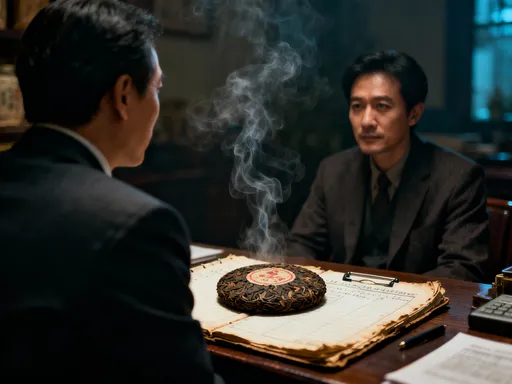
The rare tea world is not level. It is populated by decades-long collectors, family-run estates, and intermediaries with insider information. Authentication is often based on reputation rather than documentation. I once purchased a cake labeled as a 1988 production from a well-known factory, only to later learn from a specialist that it had been “re-wrapped”—a practice where older packaging is applied to newer tea to inflate perceived value. Without access to forensic testing or provenance databases, I had no way to verify the claim independently. My research had not equipped me to detect this kind of deception.
This experience exposed the concept of information asymmetry: a situation where one party in a transaction has significantly more or better information than the other. In mainstream financial markets, regulations like disclosure requirements and auditing standards help reduce this imbalance. But in unregulated collectible markets, the burden of verification falls entirely on the buyer. Expertise helps, but it does not eliminate the risk. There will always be someone with deeper connections, older records, or better access to authentic stock. Confidence, without independent verification, can lead to overexposure.
Moreover, deep knowledge can create a false sense of security, leading investors to take on more risk than they realize. Because I felt competent, I was willing to pay higher prices and hold longer, assuming I could eventually find the right buyer. But knowledge does not guarantee liquidity, nor does it protect against market shifts. The realization that being informed is not the same as being protected was one of the most humbling moments in my investing journey. It underscored the importance of humility, third-party validation, and the limits of self-reliance in financial decision-making.
Rebuilding a Smarter Portfolio: Lessons in Risk and Balance
After stepping back and assessing the full picture, I made a deliberate choice: not to abandon passion investments entirely, but to redefine their role. I liquidated a significant portion of my tea collection through a combination of private sales and donations, accepting that some losses were inevitable. The proceeds were reinvested into assets with greater transparency, liquidity, and income potential—low-cost index funds, dividend-paying stocks, and short-term bonds. I also established a new rule: no single alternative investment could exceed 5% of my total portfolio value.
This limit serves as a safeguard against emotional overreach. It allows me to engage with collectibles—whether tea, books, or art—without compromising financial stability. Each passion investment is now treated as a discretionary expense with the potential for enjoyment, not a primary wealth-building tool. I prioritize assets that offer third-party verification, clear provenance, and active resale markets. For tea, this means focusing on recent, well-documented batches from reputable sources, intended for personal use rather than speculation.
I also implemented a regular portfolio review process, using simple metrics to assess allocation, performance, and risk exposure. This discipline helps counteract emotional decision-making and ensures that no single asset class grows unchecked. Additionally, I now consult with financial advisors before making any non-traditional investments, seeking objective feedback on risk and alignment with long-term goals. These changes have not eliminated risk, but they have shifted the balance from reactive passion to proactive strategy.
The journey taught me that financial resilience comes not from chasing exotic returns, but from consistency, transparency, and self-awareness. Passion and prudence are not mutually exclusive, but they must be carefully balanced. A well-structured portfolio doesn’t exclude personal interests—it contains them within reasonable boundaries. The real measure of success is not the resale value of a rare tea cake, but the peace of mind that comes from knowing your financial foundation is secure, adaptable, and aligned with your life’s priorities.
Investing in tea taught me more about myself than about markets. It revealed how easily passion can override prudence. While tangible assets can add depth to a portfolio, they demand caution, research, and honest self-assessment. The real win isn’t in the resale value of a rare cake of leaves—it’s in building a resilient, balanced strategy that protects your future. This experience didn’t sour me on alternative investments; it just made me smarter about where I place my trust—and my money.